A rattle may have survived the dishwasher, the diaper bag and two older siblings, but its purple knob comes off in your hand. That small moment is a reason to check for a small parts choking hazard, and a November 12 recall shows why a quick home check can be useful.
Quick Review
- What was recalled: About 2,657 SHEIN Baby Rattle and Teether Toy Sets, each containing seven pastel toys.
- The hazard: Purple and orange knobs can detach, creating a choking hazard for children under three.
- What to do: Stop using the set, take it away from children and contact SHEIN for a refund. Consumers will be asked to confirm disposal.
- How to identify it: Look for SKU sk25070936134444119 on the upper right corner of the packaging label.
What The SHEIN Recall Actually Caught
On November 12, 2026, the U.S. Consumer Product Safety Commission (CPSC) announced the recall of the sets, sold at US.Shein.com from November 2025 through July 2026 for about $10. The toys are intended for children under three, and the detachable knobs violate the federal small parts ban. No incidents or injuries had been reported at the time of the announcement. Read the CPSC recall notice for product details.

Product photo from the CPSC recall notice.
The federal rule applies to toys and other products intended for children under three. A toy or detachable piece that fits entirely inside the official small parts tester, without compression, is prohibited under the rule. A part that comes off can be a concern even when the toy itself is much larger.
If you have this set:
- Stop using it immediately and remove it from children’s reach.
- Check the packaging label for SKU sk25070936134444119, located in the label’s upper right corner.
- Contact SHEIN at 833-853-8668, Monday through Friday, 9 a.m. to 6 p.m. Pacific Time; email uscsteam@shein.com; or use SHEIN’s product recalls page.
- Follow the refund instructions. Consumers will be asked to confirm that they disposed of the set.

The CPSC recall notice shows where the SKU appears on the label. Check the upper right corner before you box the set up.
Test For A Small Parts Choking Hazard In 30 Seconds
The official CPSC test cylinder is 2.25 inches long and 1.25 inches in diameter. It approximates the fully expanded throat of a child under three. Under 16 C.F.R. Part 1501, an item intended for this age group is banned if it fits entirely inside the cylinder, tested without compression.
Here’s the honest version of the toilet paper roll test: it is a rough, cautious first screen, not the legal test. CPSC notes that a toilet paper roll is wider and longer than the official tester. That means it may flag more items than the law does. If an item fits into the roll, put it aside and check further; the roll alone cannot tell you whether a product meets the legal standard. The agency explains the difference in its small-parts guidance for parents.
There’s a second important limit: the official test is done without compression. A soft foam or rubber piece may look too large, yet squish into a smaller shape. Alongside a tube screen, gently squeeze and tug soft parts and knobs to check whether they compress, loosen or detach. If a part comes off or seems damaged, keep it away from young children and contact the manufacturer for guidance. This home check is not a product safety certification.
Sweep The Places Small Objects Hide
A brief sweep can help you catch everyday hazards before a little one finds them. Check the floor and reachable surfaces in play areas, bedrooms and shared spaces. Look under furniture and between couch cushions for coins, small toys, batteries and other objects a child could pick up. Batteries deserve their own check, since a swallowed coin battery burns faster than a choking object blocks: our guide to button battery dangers explains what to do in those first two hours.
Pay special attention when older children share space with toddlers. Older siblings may offer a small toy, snack or other object without realizing it is unsafe for a younger child. Keep age-inappropriate toys and their loose parts stored out of reach, and follow age labels on toy packages. As CPSC notes, age guidance reflects safety as well as a child’s abilities.
More than four minutes without oxygen can cause brain damage or death, and most children who die from choking are under age five.
Know a parent who needs this? Send it to them.
Reduce Food Choking Risks At Mealtimes
The American Academy of Pediatrics advises cutting food for infants and young children into pieces no larger than one-half inch. Keep high-risk foods away until age four or older, depending on your child’s development. Foods that may need particular care include whole grapes, hot dogs, nuts, popcorn, hard candy, chunks of raw vegetables and thick spoonfuls of nut butter. See the AAP’s choking prevention guidance for more examples and age-specific context.
Have children sit at the table or in another safe seat while eating. Don’t let them run, walk, play or lie down with food in their mouths. The CDC’s mealtime guidance also recommends keeping meals calm, avoiding eating in the car or stroller, and watching children closely while they eat. Balloons can pose a choking risk to children up to age eight, so keep them away from young children.
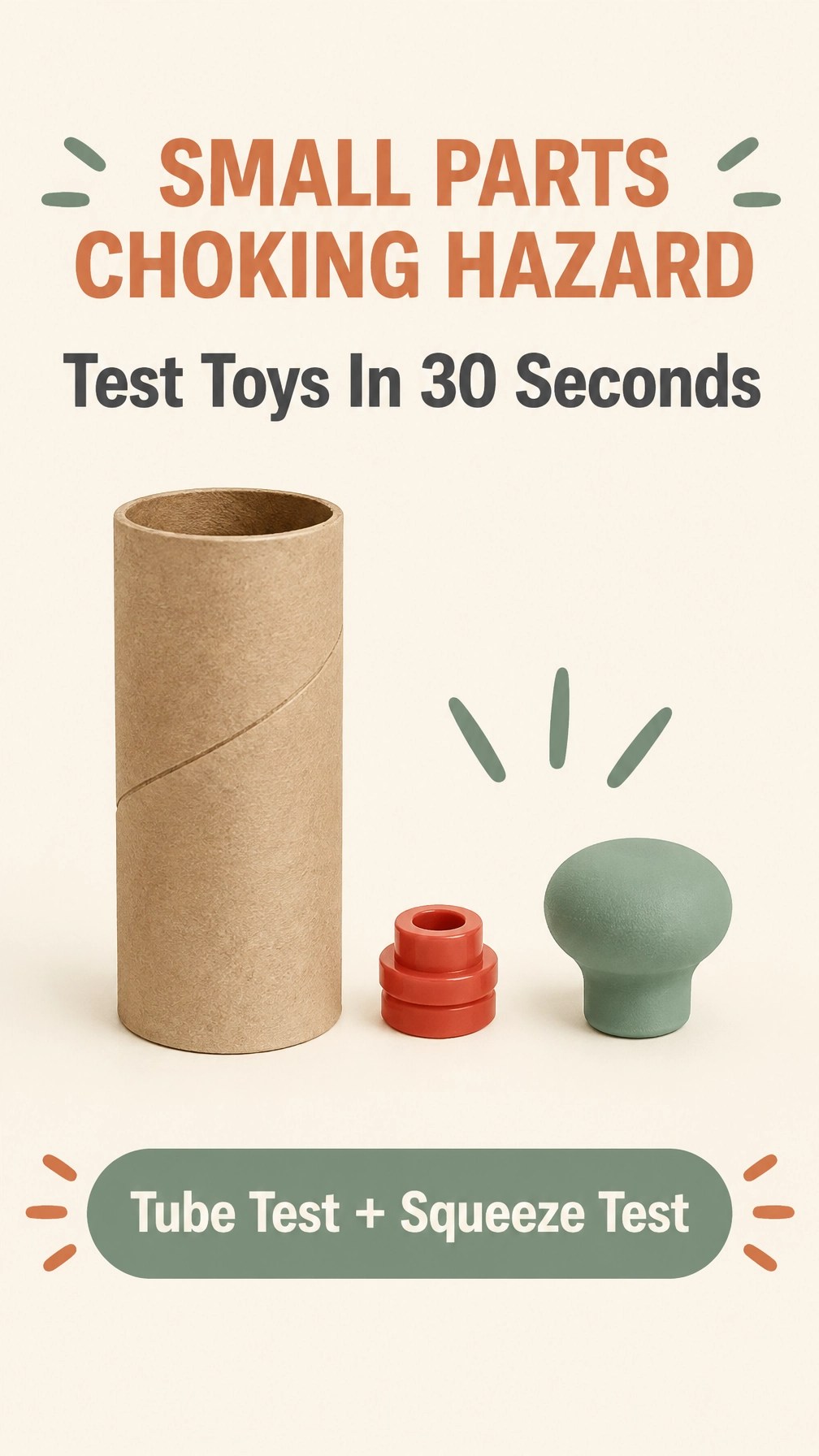
Save this quick reminder: use the tube as a first screen, then check soft or detachable parts.
Know The Signs And Call For Help
A child may be choking if they cannot breathe; are gasping or wheezing; cannot talk, cry or make noise; turn bluish; grab at their throat or wave their arms in panic; or become limp or unconscious. The AAP notes that coughing may settle within about 15 minutes whether or not the object comes out, so watch the child closely and be ready to act if symptoms worsen.
If a child cannot breathe, call 911. Consider taking a certified CPR and first aid class through the American Red Cross so you can learn how to respond in an emergency.
Frequently Asked Questions
Is The Toilet Paper Roll Test The Official CPSC Test?
No. It is a rough at-home screen. The official test uses a cylinder with specific dimensions, and a toilet paper roll is wider and longer.
What If A Toy Fits In The Roll But Not The Official Tester?
Treat the roll result as a prompt to look more closely, not a legal verdict. The roll can flag items the official tester would not. When uncertain, keep the item away from young children and ask the manufacturer or a qualified safety professional.
Can A Soft Toy Part Still Be A Choking Hazard?
Yes. The official small-parts test is done without compression, but soft foam or rubber may compress in a child’s mouth. Check soft parts for compression and look for loose or detachable pieces.
What Should I Do With The Recalled SHEIN Set?
Stop using it, take it away from children and contact SHEIN for a refund. Follow the company’s disposal instructions and confirm disposal as requested. The CPSC recall notice lists the full details, and CPSC’s recall feed is worth checking the week new toys come into your house.
Join the SCN newsletter for child safety resources and updates. Explore the SCN website to find more practical safety guides for your family.
What small parts or hidden objects do you check for most often at home? Tell us in the comments.
If this helped, share it with another parent and follow Secure Children's Network on Facebook, X and LinkedIn for safety alerts.
Author: Janice Robinson-Celeste
Discover more from
Subscribe to get the latest posts sent to your email.