Quick Review
- Take a moment to steady yourself before you start talking.
- Ask, “What have you heard?” and let your child lead.
- Be truthful, keep details age-appropriate, and correct rumors gently.
- Reassure your child about what trusted adults are doing, without promising that nothing bad can happen.
- Watch for changes in sleep, appetite, mood, or willingness to attend school.
Your child may hear about the Silver Rail Elementary shooting from a school email, a classmate, or a video before you have decided what to say. You do not need perfect words tonight; a calm, honest conversation that begins with listening can help your child feel supported.
By Janice Robinson-Celeste
Audio: Audio version coming soon.
What Happened At Silver Rail Elementary
On October 15, 2026, a shooting at Silver Rail Elementary School in Bend, Oregon, killed three children, ages 5, 8, and 11, and teacher Megan Lambert, 25. The family of 5-year-old kindergartner Rhoam Summer identified him publicly. A 7-year-old girl and educational assistant Rebecca Drury, 54, were also critically injured. Later updates described Drury’s injuries as serious but not life-threatening and the child’s condition as serious but stable, according to NBC News reporting.
Police identified 16-year-old Griffin J. John II, a former student, as the shooter. Authorities said he threw a pump-action shotgun over the school fence around 1 p.m., fired through locked doors, and entered a special needs classroom. A teacher fought to take the gun. A parent, Kaylub Giamanco, 36, followed the shooter and stopped him. Police arrived within three minutes.
Authorities also said the suspect’s mother bought the gun around his August birthday. The investigation into how he accessed it is continuing. AP News coverage and NBC News’ account report on the incident and the ongoing investigation. We are keeping this recap brief so the focus can stay on what your child needs from you.
Start By Steadying Yourself And Listening
Oregon therapist Olivia Gordon told OPB that parents can think of the airplane safety instruction: put on your own oxygen mask before helping your child. Take a few breaths, get a glass of water, or speak with another adult first if you need to. You can show emotion, too. The aim is to avoid placing the weight of your feelings on your child.
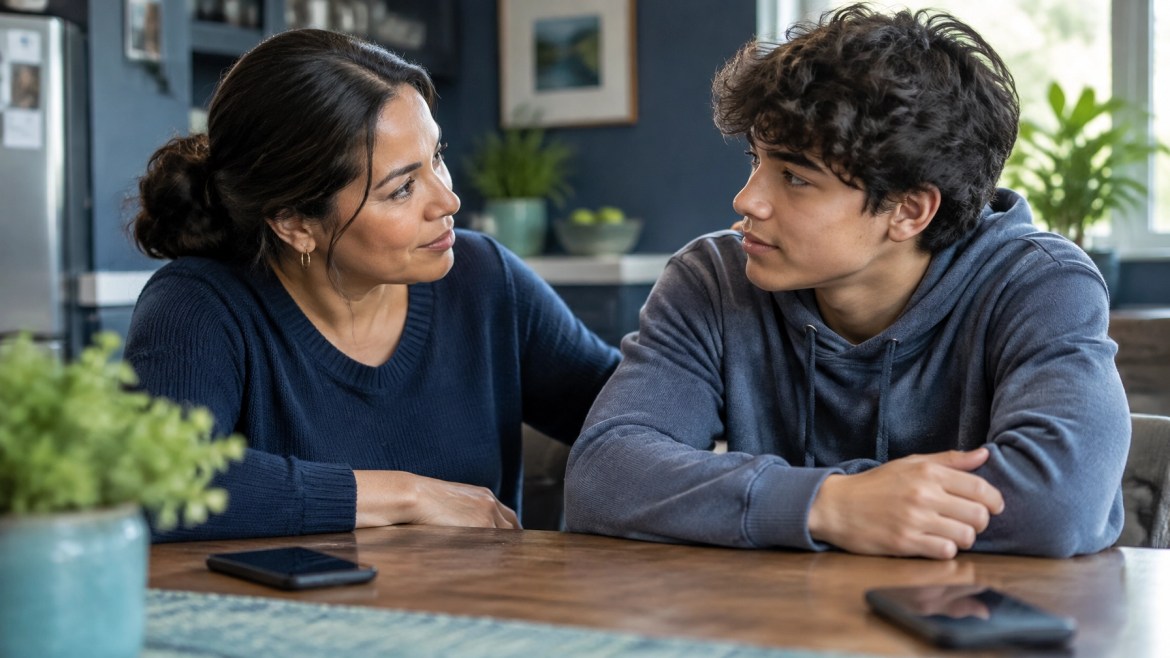
Then try a simple opening: “What have you heard about what happened?” Listen before offering details or reassurance. Your child may have heard a rumor, seen a headline, or know very little. Ask what they are wondering, and answer the question they actually asked.
Some children may not want to talk right away. That is okay. Let them know you are available, then leave the door open to return to the conversation later. The Dougy Center’s guidance for talking with children about tragic events also emphasizes making room for children to respond in their own way and in their own time.
Tell The Truth, And Match Details To Their Age
Avoid graphic descriptions and speculation. If your child has heard something inaccurate, correct it calmly: “That detail isn’t confirmed. Let’s wait for reliable information.” It is fine to say, “I don’t know, but I’ll try to find out.”
Do not promise, “That could never happen at your school.” You can offer honest reassurance instead: “Everyone at your school is doing everything they can to keep you safe.” If you know specific safeguards, such as locked exterior doors or how students can reach a trusted adult, explain those in simple terms.
The National Association of School Psychologists (NASP) recommends letting children’s questions guide how much information you give. Consider these age-aware starting points:
- Early elementary: Keep it brief and reassuring. Say that something sad happened at a school far away, and trusted adults are working to keep children safe.
- Upper elementary: Answer questions honestly. Ask what your child’s school has shared and what they want to know about its safety steps.
- Teens: Make space for opinions and concerns. Help them separate confirmed reporting from rumors, and talk together about whether they need a break from repeated coverage.
For older children, discuss reporting concerns to a trusted adult. Explain that sharing a specific safety concern is not tattling or gossiping; it is a way to help adults respond responsibly.
Put Risk In Perspective Without Minimizing The Loss
A frightening event can make danger feel close, even when a child is far from it. NASP’s handout says schools are among the safest places for children. It also cites estimates based on 2020-2021 data, which are historical, population-level figures, not guarantees about any one school.
NASP’s handout estimates that a given school might experience a shooting with casualties about once every 1,400 years, and that the chance of being injured or killed at school is about 1 in 450,000. These figures can offer perspective, but they do not lessen the devastating impact on the Silver Rail community.
Know a parent who needs this? Send it to them.

Limit Repeated Coverage And Keep Familiar Routines
Repeated headlines and video clips can make an upsetting event feel as though it is happening again and again. For younger children, keep news and social media out of view where possible. With teens, talk together about what they are seeing and whether stepping away from updates would help. University of Oregon guidance for supporting children after a school shooting recommends limiting exposure to disturbing content while letting children set the pace of conversation.
Regular meals, bedtime, school, play, and time with people they trust can help restore a sense of steadiness. Children can feel sad and still want to laugh or play. As OPB’s interview with Oregon experts explains, making room for ordinary moments and joy does not mean ignoring what happened.
Notice Changes And Reach Out For Support
Children may show stress in different ways. You might notice clinginess, nightmares, fear of the dark, irritability, or extra vigilance. A change does not automatically mean something is seriously wrong, but it is worth offering patience and connection.
If sleep or appetite changes persist, your child begins avoiding school, or distress worsens or interferes with daily life, contact their pediatrician, school counselor, or a mental health professional. The Dougy Center’s resources for families offer additional support for talking with children about mass tragedies.
Frequently Asked Questions
What if my child has not heard about the shooting?
You do not need to introduce graphic details. Consider your child’s age and whether the news is likely to reach them. If you decide to mention it, keep it brief, truthful, and reassuring.
What if my child asks whether it could happen at their school?
Acknowledge the worry rather than dismissing it. You might say, “I understand why you’re asking. Adults at your school are working to keep students safe. Let’s find out what safety steps they have shared.”
Should I make my child talk about it?
No. Let them know you are ready to listen, and check in gently later. Some children may prefer drawing, playing, or spending time together instead of talking directly.
Where can I find more guidance?
Read the NASP family guidance, explore the University of Oregon’s recommendations, or visit SCN’s parent resources.
Keep The Conversation Open
You do not have to solve every fear in one conversation. Listen, share what you know, and remind your child that they can come back to you with more questions. Join our newsletter for practical child-safety resources and updates from Secure Children’s Network, and explore ways to get involved with SCN.
How did your school or family handle the conversation this weekend?
If this helped, share it with another parent and follow Secure Children's Network on Facebook, X and LinkedIn for safety alerts.
Discover more from
Subscribe to get the latest posts sent to your email.